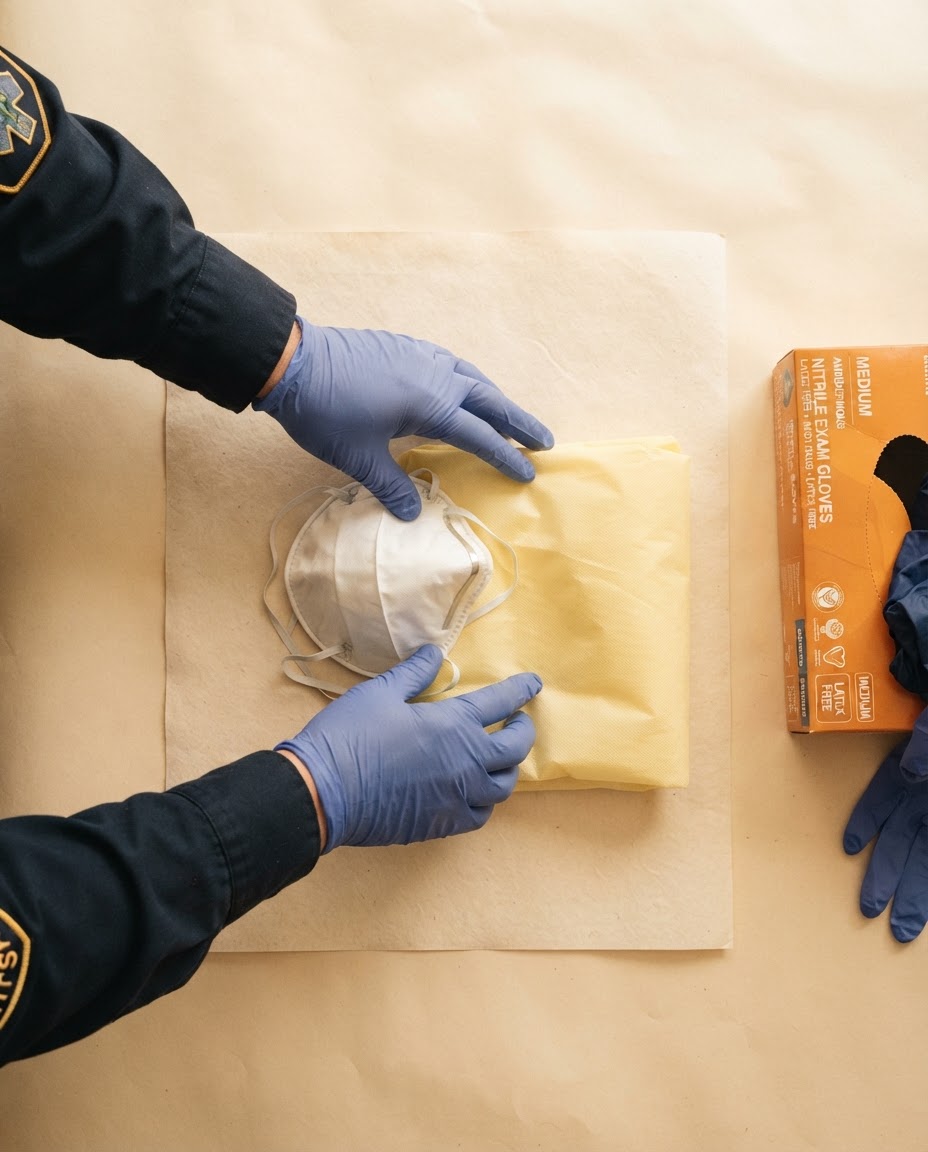
Prehospital Infection Control
Updated Jan 14, 2026Required Documentation
PPE Selection Colour Guide
Risk Group
Disease
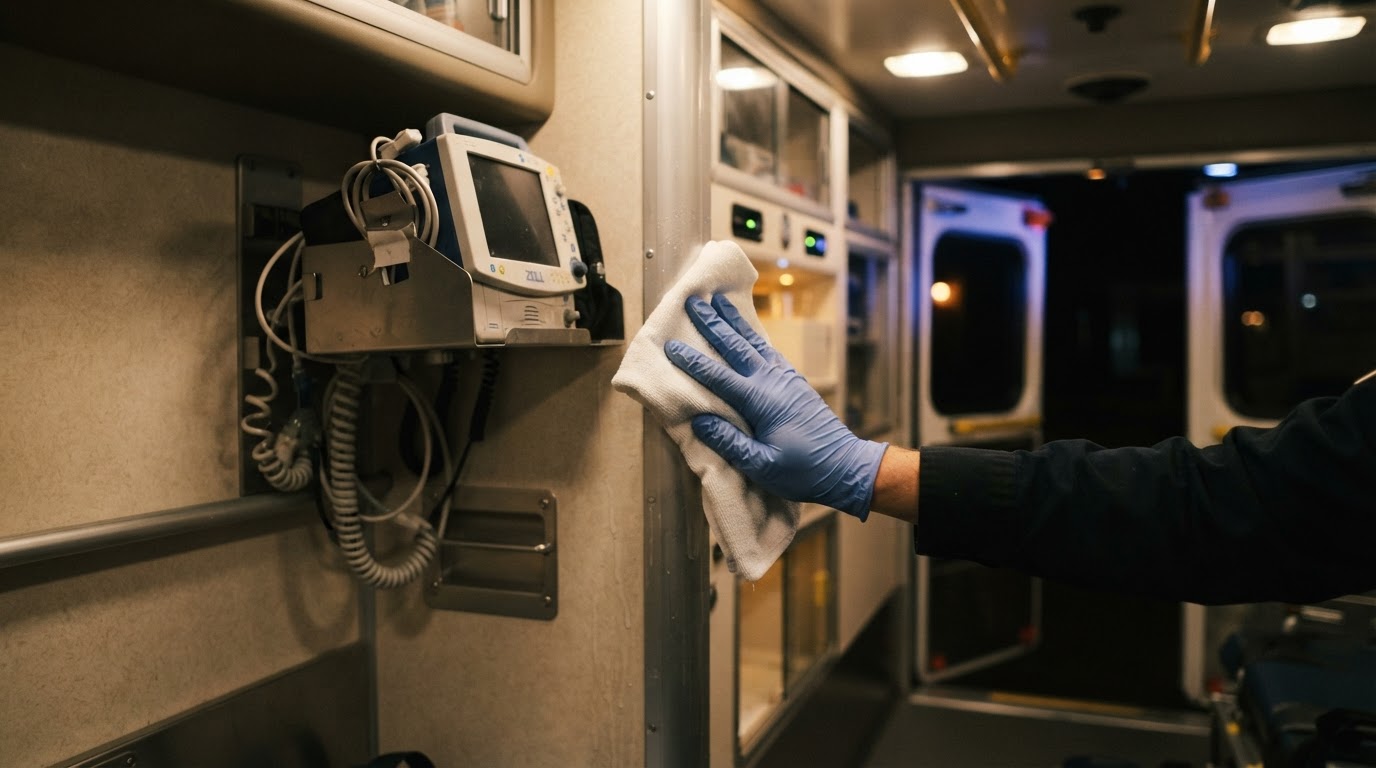
ROUTINE FIELD CLEANING and DISINFECTION
ROUTINE FIELD CLEANING and DISINFECTION
The supplied disinfectant wipes are provided for general post-call cleaning and disinfection whereas the vehicle and equipment is not grossly contaminated and there were no known or suspected infectious diseases. PIDAC recognizes that routine cleaning and disinfection is more commonly accomplished in health care settings through a one-step process using a combined cleaner-disinfectant product.
Procedure:
1. Perform Hand Hygiene
2. Don required PPE: Gloves at minimum; escalate to higher level of PPE if there is a risk of splashes or sprays (i.e. Gown, N-95, safety eyewear/face shield)
3. Keep the exhaust fan on at all times when cleaning and disinfecting in the back of the vehicle.
4. Place all biomedical waste in a clearly marked biohazardous waste receptacle (i.e. dressings, bandages)
5. Carefully dispose of any sharps that are found during cleaning in an appropriate sharps container
6. Place all used linens in laundry bag for laundering
7. Clean and disinfect all hard surfaces and high touch areas including floors in crew cab and patient compartment using supplied disinfectant wipes, using a different clean wipe for each different surface (I.e. radio, phone, computer keyboard, windows, ceiling, walls, door handles, stretcher railings, stretcher side rails, stethoscopes, scissors etc..)
8. Wipe from front to back, top to bottom, and from clean to dirty on all surfaces, DO NOT use a circular motion while cleaning or disinfecting.
9. Clean and disinfect stretcher including mattress and straps
10. Clean and disinfect crew bench, captains chair, jump seat to include seatbelts
11. Clean and disinfect all reuseable equipment (i.e. LP 15 cables, SPO2 cable, BP cuff, stethoscope, scissors, stair chair etc…)
12. Used wipes should be disposed as regular waste in garbage bags.
13. Allow surfaces to remain wet for 3-minutes (or recommended 'kill time) to achieve the Bactericidal, Virucide, Fungicidal and Tuberculocidal effect
14. Doff PPE and discard as regular waste in garbage bags
15. Perform hand hygiene
16. Restock used equipment as required and return to duty
SUPPLIED DISINFECTANT FIELD CLEANING and DISINFECTION
Supplied disinfectant wipes are provided for general cleaning and disinfection of common pathogens and Tuberculosis. Disinfectant 'KILL TIMES' may vary dependant on the supplied chemical disinfectant.
Appropriate when: Proper PPE was worn. No personal decontamination/uniform change is required. No gross contamination occurred. Notify your Operations Superintendent of any contact or exposure to a patient with a known or suspected history of communicable disease for direction on cleaning and disinfection, and Designated Officer documentation.
No Visible Body Fluids:
1. Perform Hand Hygiene
2. Don required PPE: Gloves at minimum; escalate to higher level of PPE if there is a risk of splashes or sprays (i.e. Gown, N-95, Safety Eyewear/Faceshield)
3. Keep the exhaust fan on at all times when cleaning and disinfecting in the back of the vehicle.
4. Contaminated linens should be placed in a laundry bag for laundering or disposal.
5. Clean and dry all surfaces prior to disinfection using supplied disinfectant wipes.
6. Contaminated reusable equipment should be placed in a separate labelled bio-hazard bag for laundering or disposal.
7. Disinfect all surfaces and equipment used using supplied disinfectant wipes, using a different clean wipe for each different surface.
8. Wipe from front to back, top to bottom, and from clean to dirty on all surfaces, DO NOT use a circular motion while cleaning or disinfecting.
9. Allow surfaces to remain wet for recommended kill time to achieve the Bactericidal, Virucide, Fungicidal and Tuberculocidal effect
10. Used wipes should be disposed as regular waste in garbage bags, unless human tissue is attached, then into a labelled bio-hazard bag for an appropriate waste disposal.
11. Following appropriate doffing procedures remove and discard PPE.
12. Perform Hand Hygiene.
Visible Body Fluids:
1. Perform Hand Hygiene
2. Don required PPE: during cleaning and disinfecting PPE remains the same as when with the patient; i.e. N95, safety eyewear, nitrile gloves and gown.
3. Keep the exhaust fan on at all times when cleaning and disinfecting in the back of the vehicle.
4. Contaminated/soiled linens should be placed in a laundry bag for laundering or disposal.
5. Contaminated reusable equipment should be placed in a separate labelled bio-hazard bag for laundering or disposal.
6. Contaminated waste should be placed in a separate labelled bio-hazard bag for disposal.
7. If minor visible soiling (blood, body fluid) is present, it must be removed prior to cleaning and disinfection.
8. Remove visible soiling by blotting up the fluids with disposable towels. If more than 10 towels are required, contact your Operations Superintendent
9. Clean and dry all surfaces prior to disinfection using supplied disinfectant wipes.
10. Disinfect all surfaces using supplied disinfectant wipes, using a different clean wipe for each different surface.
11. Wipe from front to back, top to bottom, and from clean to dirty on all surfaces, DO NOT use a circular motion while cleaning or disinfecting.
12. Allow surfaces to remain wet for recommended kill time to achieve the Bactericidal, Virucide, Fungicidal and Tuberculocidal effect.
13. Used wipes should be disposed as regular waste in garbage bags, unless human tissue is attached, then into a labelled bio-hazard bag for an appropriate waste disposal.
14. Following appropriate doffing procedures remove and discard PPE.
15. Perform Hand Hygiene
REScue Sporicidal
REScue Sporicidal wipes are provided for cleaning and disinfection of Clostridioides difficile (CDI) ONLY (formerly C.Diff).
Appropriate when: Proper PPE was worn. No personal decontamination/uniform change is required. No gross contamination occurred. Notify your Superintendent of any contact or exposure to a known or suspected communicable disease for direction on the required cleaning, disinfection, and Designated Officer documentation.
SAFETY NOTE: EYE PROTECTION IS REQUIRED WHEN USING RESCUE SPORICIDAL WIPES TO REDUCE THE RISK OF POTENTIAL SPLASH/EXPOSURE TO THE EYES DURING CLEANING AND DISINFECTION PROCEDURES.
No Visible Body Fluids:
1. Perform Hand Hygiene
2. Don required PPE: gown, N95, safety eyewear, and nitrile gloves for cleaning and disinfection procedures.
3. Keep the exhaust fan on at all times when cleaning and disinfecting in the back of the vehicle.
4. Contaminated linens should be placed in a labelled bio-hazard bag for laundering or disposal.
5. Contaminated reusable equipment should be placed in a separate labelled bio-hazard bag for laundering or disposal.
6. Clean and dry all surfaces prior to disinfection using Rescue Sporicidal wipes.
7. Disinfect all surfaces and equipment used using Rescue Sporicidal wipes, using a different clean wipe for each different surface.
8. Wipe from front to back, top to bottom, and from clean to dirty on all surfaces, DO NOT use a circular motion while cleaning or disinfecting.
9. Allow surfaces to remain wet for 10-minutes to achieve the Sporicidal effect.
10. Used wipes should be disposed as regular waste in garbage bags, unless human tissue is attached, then into a labelled bio-hazard bag for an appropriate waste disposal.
11. Following appropriate doffing procedures remove and discard PPE.
12. Perform Hand Hygiene.
Visible Body Fluids:
1. Perform Hand Hygiene
2. Don required PPE: Gloves, mask, eye protection and gown.
3. Keep the exhaust fan on at all times when cleaning and disinfecting in the back of the vehicle.
4. Contaminated/soiled linens should be placed in a labelled bio-hazard bag for laundering or disposal.
5. Contaminated reusable equipment should be placed in a separate labelled bio-hazard bag for laundering or disposal.
6. Contaminated waste should be placed in a separate labelled bio-hazard bag for disposal.
7. If minor visible soiling (blood or body fluid) is present, it must be removed prior to cleaning and disinfection.
8. Remove visible soiling by blotting up the fluids with disposable towels. If more than 10 towels are required, contact your Operations Superintendent
9. Clean and dry all surfaces prior to disinfection using Rescue Sporicidal wipes.
10. Disinfect all surfaces using Rescue Sporicidal wipes, using a different clean wipe for each different surface.
11. Wipe from front to back, top to bottom, and from clean to dirty on all surfaces, DO NOT use a circular motion while cleaning or disinfecting.
12. To disinfect all surfaces apply Rescue Sporicidal and allow surfaces to remain wet for 10-minutes to achieve the Sporicidal effect
13. Used wipes should be disposed as regular waste in garbage bags, unless human tissue is attached, then into a labelled bio-hazard bag for an appropriate waste disposal.
14. Following appropriate doffing procedures remove and discard PPE.
15. Perform Hand Hygiene
Standard Cytotoxic Handling Procedure
General
1. Conduct a risk assessment and don appropriate PPE, gown and gloves at minimum (Enhanced PPE may be required - Lakeland donning/doffing checklist – high risk PPE Bag) when handling cytotoxic drug spills or body fluids within a 48 hour window of patient receiving cytotoxic drugs
2. All PPE and non-sharp solid waste go in supplied biohazard bags
3. All sharps go in a supplied sharps container and disposed of into supplied biohazard bag
4. Discard gloves between each drug or body fluid interaction
5. Tie up supplied biohazard bags tightly (double-knot)
6. Any contact/exposure with chemotherapy drugs and/or cytotoxic body fluids will need additional cleaning and decontamination measures at headquarters. Contact your Superintendent Operations for further direction.
8. Complete a Contact or Exposure Report, IR's, WSIB Reports.
Body Fluid Spills:
1. Reusable items that are not soaked or saturated (dripping) with cytotoxic drugs or body fluids may be laundered
2. Remove contaminated PPE, (uniform, clothing and linens from yourself first if contaminated), and then assist the patient
3. Use towels/absorbent pads to absorb the spill and discard items into supplied biohazard bag
4. Place all contaminated materials into supplied biohazard bags.
Personal Protective Equipment:
1. Minimum gown & gloves
2. Escalate personal protective equipment based on risk assessment (Lakeland suit/gown, mask, safety glasses/faceshield and gloves) when there is a risk of blood and/or other potentially contaminated body fluids generated by splashes or sprays.
Unmanageable Cytotoxic Drug or Body Fluid Spills:
1. Stop working and drop absorbent material (towels/absorbent pads) on the spill to prevent spreading
2. Remove PPE if contaminated
3. Don new PPE before re-entering spill area.
First Aid Measures:
Procedure for dealing with contaminated clothing and personal protective equipment:
1. Immediately remove any contaminated personal protective equipment and clothing and dispose of in the supplied biohazard bag. Don Tyvek suit
2. Package clothing for laundering that is not overtly contaminated
3. Notify CACC/Field Superintendent.
Procedure for dealing with direct skin, eye and other body contact of employees:
1. Remove affected clothing and wash the affected skin and flush thoroughly with copious amounts of water
2. For eye exposure, immediately flood the affected eye with clean water by continuous irrigation for a period of 15 minutes
3. Notify CACC and Field Superintendent immediately
4. Second crew may be necessary to respond to scene and assume patient care
5. Seek medical advice and medical attention as necessary.
Ensure that all cytotoxic waste generated on scene from a suspected or known cytotoxic threat will be handled safely and properly disposed of:
1. Removes from scene and places all potentially contaminated biomedical/cytotoxic waste (sharps container(s), disposable equipment, linen and used PPE) into supplied biohazard bag.
2. Transporting crew will notify receiving facility of actual or potential cytotoxic event and follow directions regarding patient transfer of care.
3. Paramedic(s) will notify the Field Superintendent on completion of the call with a suspected or known high-risk cytotoxic event involving blood and/or other body fluids to include excreta and/or spilled medication and complete documentation as necessary
4. Return to HQ for personal decontamination procedures and high-level vehicle & equipment decontamination as required.
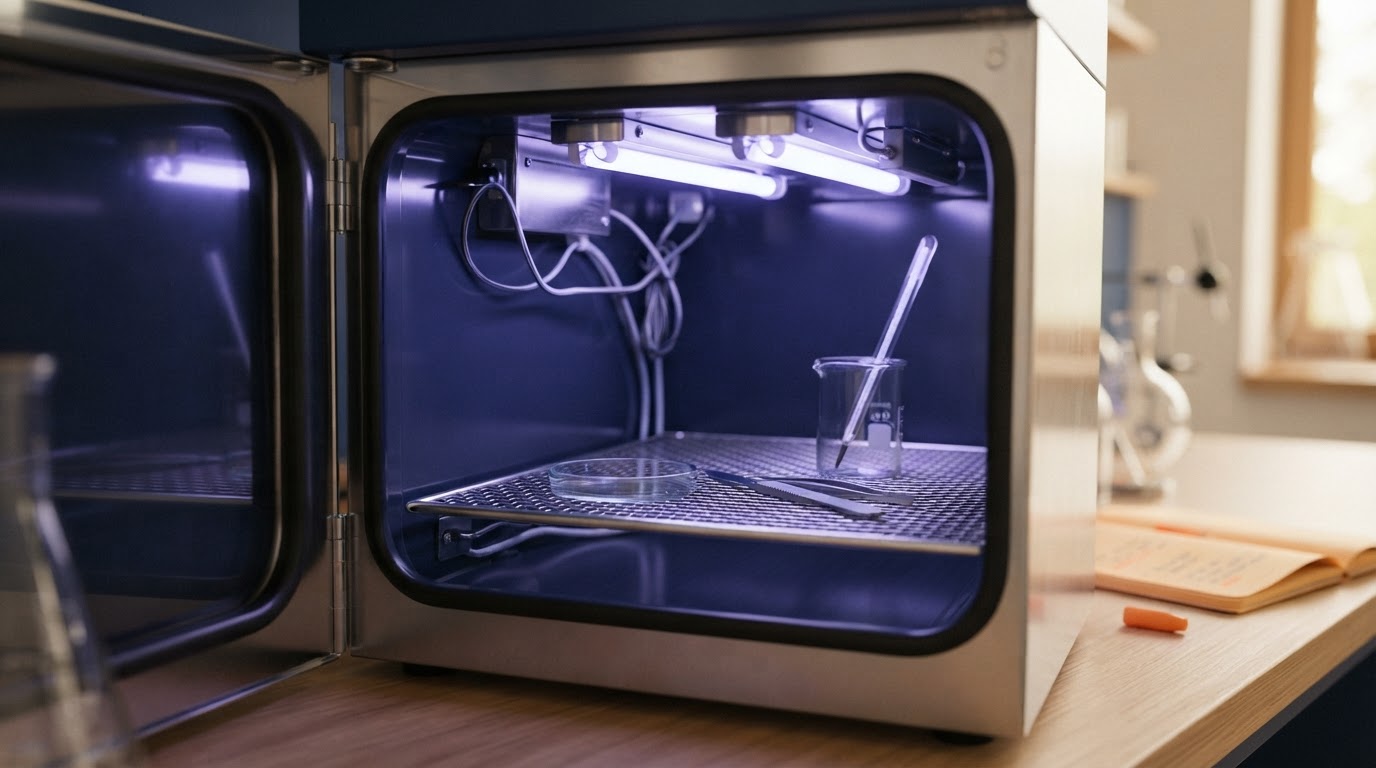
HQ CLEANING and DISINFECTION
HQ CLEANING and DISINFECTION
Disinfecting wipes are provided for general cleaning and disinfection of common pathogens and Tuberculosis. Disinfectant 'KILL TIMES' may vary dependant on the supplied chemical disinfectant.
Appropriate when: Proper PPE was not worn. Personal contamination has occurred and personal decontamination/uniform change is required. AGMP and/or Gross contamination occurred. Notify your Operations Superintendent of any contact or exposure to a patient with a known or suspected history of communicable disease for direction on cleaning and disinfection, and Designated Officer documentation.
1. If directed to return to HQ for cleaning and disinfection and/or personal decontamination, park in the Vehicle Decontamination Line and advise Supt via the intercom or vehicle cell phone.
2. Do not enter HQ or the Decontamination Bay until directed to do so.
3. Follow decontamination bay protocols for personal decontamination.
4. Clean and disinfect vehicle and equipment as per above below.
No Visible Body Fluids:
1. Perform Hand Hygiene
2. Don required PPE: Gloves at minimum; escalate to higher level of PPE if there is a risk of splashes or sprays (i.e. Gown, N-95, Safety Eyewear/Faceshield)
3. Keep the exhaust fan on at all times when cleaning and disinfecting in the back of the vehicle.
4. Contaminated linens should be placed in a laundry bag for laundering or disposal.
5. Contaminated reusable equipment should be placed in a separate labelled bio-hazard bag for laundering or disposal.
6. Clean and dry all surfaces prior to disinfection using supplied disinfectant wipes or mop and AHP solution (as supplied by Logistics)
7. Disinfect all surfaces and equipment used using supplied disinfectant wipes, using a different clean wipe for each different surface.
8. Wipe from front to back, top to bottom, and from clean to dirty on all surfaces, DO NOT use a circular motion while cleaning or disinfecting.
9. Allow surfaces to remain wet for recommended kill time to achieve the Bactericidal, Virucide, Fungicidal and Tuberculocidal effect
10. Used wipes should be disposed as regular waste in garbage bags, unless human tissue is attached, then into a labelled bio-hazard bag for an appropriate waste disposal.
11. Crew uses prepared mop & bucket to clean & disinfect vehicle floors - crew & vehicle compartments
12. Following appropriate doffing procedures remove and discard PPE.
13. Perform Hand Hygiene.
Visible Body Fluids:
1. Perform Hand Hygiene
2. Don required PPE: during cleaning and disinfecting PPE remains the same as when with the patient; i.e. N95, safety eyewear, nitrile gloves and gown.
3. Keep the exhaust fan on at all times when cleaning and disinfecting in the back of the vehicle.
4. Contaminated/soiled linens should be placed in a laundry bag for laundering or disposal.
5. Contaminated reusable equipment should be placed in a separate labelled bio-hazard bag for laundering or disposal.
6. Contaminated waste should be placed in a separate labelled bio-hazard bag for disposal.
7. If minor visible soiling (blood, body fluid) is present, it must be removed prior to cleaning and disinfection.
8. Remove visible soiling by blotting up the fluids with disposable towels. If more than 10 towels are required, contact your Operations Superintendent
9. Clean and dry all surfaces prior to disinfection using supplied disinfectant wipes or mop and AHP solution (as supplied by Logistics)
10. Disinfect all surfaces using supplied disinfectant wipes, using a different clean wipe for each different surface.
11. Wipe from front to back, top to bottom, and from clean to dirty on all surfaces, DO NOT use a circular motion while cleaning or disinfecting.
12. Allow surfaces to remain wet for recommended kill time to achieve the Bactericidal, Virucide, Fungicidal and Tuberculocidal effect.
13. Used wipes should be disposed as regular waste in garbage bags, unless human tissue is attached, then into a labelled bio-hazard bag for an appropriate waste disposal.
14. Following appropriate doffing procedures remove and discard PPE.
15. Perform Hand Hygiene.
Refer to the full PDF for any additional HQ cleaning steps.
UV LIGHT
Refer to the full PDF for the exact UV LIGHT procedure text, including setup, exposure times, and safety requirements.
Bleach
Refer to the full PDF for the exact Bleach cleaning and disinfection procedure text, including dilution ratios, kill times, and safety requirements.
Cleaning and Disinfection of the 3M TR-300 and M-307 Helmet
Refer to the full PDF for the exact procedure text for cleaning and disinfection of the 3M TR-300 and M-307 Helmet.
Cleaning and Disinfection of the 3M 7500 Series Respirator
Refer to the full PDF for the exact procedure text for cleaning and disinfection of the 3M 7500 Series Respirator.
Sani-Sport DefenX Cabinet
Refer to the full PDF for the exact procedure text for the Sani-Sport DefenX Cabinet operation.